
The 2026 Guide for Natural Relief for Back Pain and Sciatica


The 2026 Guide for Natural Relief for Low Back Pain and Sciatica
Chances are if you are reading this, either you or a loved one is suffering from sciatica or low back pain. This condition can be all consuming.
It can be impossible to find a comfortable position to sit, stand, or sleep let alone try to make it through the day.
It often feels like it will never go away(at least that’s how I felt when dealing with it). Though each morning you wake up hoping that today will be different.
There are so, so many voices giving advice, often contradicting each other.
Is it posture? Is something out of place? Where’s the best place to take care of the issue? Do I need imaging? What’s really going on?
Hopefully this guide will help you start to figure out the right answer for you.
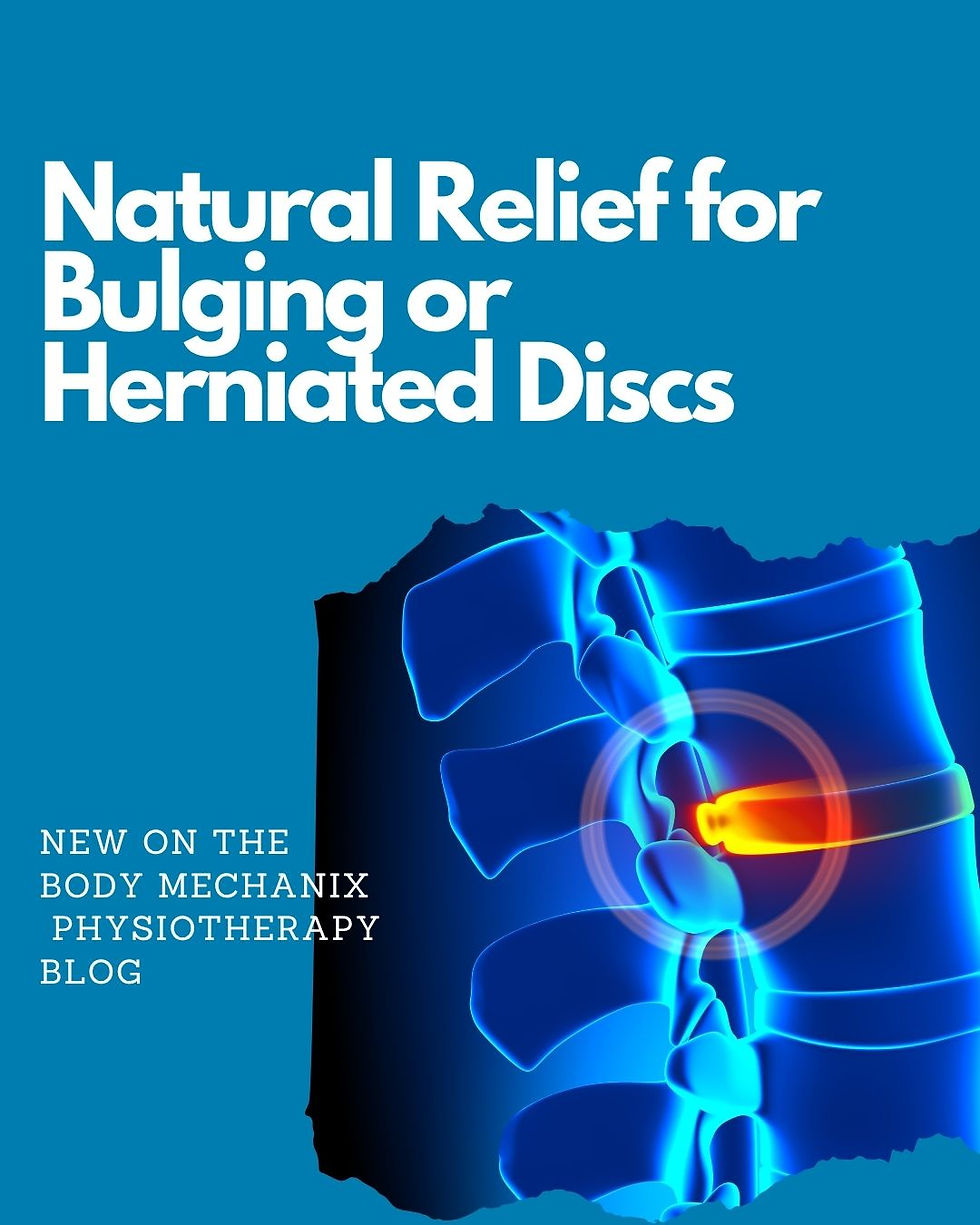
In addition to this guide, we are publishing 4 articles in our series, use these links to learn more about natural relief for degenerative disc disease, bulging or herniated discs, stenosis, and learn why back pain isn't about getting older.
Jump to:
But first, some housekeeping:
Disclaimer:
We make every effort to ensure that we accurately represent the injury advice and prognosis displayed throughout this article series. However, examples of injuries and their prognosis are based on typical representations of those injuries that we commonly see in our physiotherapy clinic in Tallahassee. The information given is not intended as representations of every individual’s potential injury. As with any injury, each person’s symptoms can vary widely and each person’s recovery from injury can also vary depending upon background, genetics, previous medical history, application of exercises, posture, motivation to follow your physio’s advice and various other physical factors. It is impossible to give a 100% complete accurate diagnosis and prognosis without a thorough physical examination and likewise the advice given for management of an injury cannot be deemed fully accurate in the absence of this examination from one of the Doctors of Physical Therapy at Body Mechanix Physiotherapy and Fitness, LLC. Significant injury risk is possible if you do not follow due diligence and seek suitable professional advice about your injury. No guarantees of specific results are expressly made or implied in this e-book and no treatment relationship is implied by this article series.
When back pain or sciatica might be an emergency
I want to start this article series off with a note of who this series is not for. The following is a list, though not exhaustive, of when you should not wait for a consultation with anybody but either your general practitioner or emergency medical care.
If you have developed numbness or tingling to the area around your bottom and genitals to your inner thighs especially when it started with the onset of your pain.
If you have started developing an inability to control your bowel or bladder(either starting or stopping/controlling).
Significant weakness to your legs including but not limited to your foot dropping or hitting the floor in an uncontrolled way when you are trying to walk. Also if you notice a growing clumsiness to your legs or walking or are having loss of balance associated with your onset of pain.
If you have a past history of cancer and are experiencing weight loss or weight gain that you can not explain.
If you are experiencing a fever along with your onset of back pain.
If you are experiencing any of those, please don’t continue reading. Once you have the all clear from your Physician, then read on. This guide is not intended as medical advice or physical therapy. It is meant for educational purposes only. Please seek qualified medical advice if unsure.
The Purpose of Pain is Protection: Understanding Back Pain
The question most everybody really wants to know is “Why am I in pain?”. Before about 2000, our understanding of pain was very different than it is today. We used to think that pain is all about damage. And, the more the pain, the more damage you had. This was often supported by imaging, especially MRIs where they could “see why you hurt”.
But soon doctors and researchers started noticing something. Degenerative disc disease(DDD), bulging and herniated discs, stenosis, arthritis and scoliosis were found in people with absolutely no pain. What’s more, the older you got, the more likely you were to have these findings.
On top of that, as people got older, fewer reported back pain to their doctors i.e. the number of older people with back pain was actually smaller than the number of younger people. In fact, the number of people suffering from back pain peaks around age 40 and it goes down after that.
This doesn’t mean that older people don’t get back pain, it just means that age does not matter as much as what we once thought when it came to sciatica and low back pain.
So, if back pain and sciatica isn’t just about discs and arthritis, what is it about?
Your body has a living alarm system called your nervous system. While some parts of your nervous system focus on movement, some parts focus on seeing or hearing things, one part focuses on keeping you safe. Its job is to notice anything that seems dangerous and let the rest of you know about it.
While their fancy name is a nociceptor, I prefer to call it our “danger detector”. This danger detector wakes up when it is stretched, pressured, or has something happen really close to it. This can come from actual damage(think stepping on a nail or spraining your ankle), moving awkwardly and pulling a muscle, or from inflammation(which comes from your immune system).
This lets the rest of your nervous system know that something dangerous might have just happened. What it doesn’t do is let you know that the body part is in pain…just possibly in danger. Our alarm system can also get tricked that there’s a threat(more on that in a bit)
The rest of our nervous system including our spinal cord and brain now have to figure out just how dangerous the alarm is. To do this, it figures out if pain actually helps you. For example, if you are walking across Thomasville Rd and you sprain your ankle…and there’s somebody driving right at you(texting) your nervous system says that the car is the bigger danger and actually shuts down the ankles danger signal so you can run and get out of the way(then it allows you to feel pain once the threat is gone).
There’s a lot of cool neuroscience going on. Long story short, your brain and spinal cord have ways of shutting down the message about the ankle(or any other part of your body that’s in danger) if there’s a greater danger.
For somebody dealing with chronic back pain, the brain and spinal cord can also amplify the signal coming in because they are convinced that the back really needs protecting. This spinal amplifier makes it so that even small movements become excruciating because it creates a protective bubble around your spine to keep you from getting anywhere close to damage.
In fact, pain’s job is to keep you from getting to damage. It acts like a fence along the edge of a cliff. Usually this fence is right along the edge. With chronic pain, the fence moves back 20-30 feet or more so you are nowhere close to danger(but it still hurts).
What’s more, several things can either move the fence closer or further away from the “cliff” meaning some days your pain is aggravated by 30 minutes of sitting while other days you just can’t get comfortable even with just a few minutes.
Why? Your alarm system and danger detectors have several sensors on them to let them “know about the world around them”. These sensors get triggered by several things. You have sensors for temperature change, stress chemicals, immune system activation(like when you’re sick), pressure, and blood flow.
This is why:
Cold fronts flare your back pain
Stress makes it worse
Sitting for too long makes it worse or go down your leg
If you get sick, everything seems to hurt or if you have an auto-immune condition your symptoms seem to flare when it does.
What’s more is that some days the pain seems to be worse in your leg, other days in your bottom, some days it even jumps to the other side of your body and goes down the other hip and leg. There doesn’t seem to be any pattern, rhyme, or reason.
But, when my patients tell me that their pain changes from day to day, hour to hour, or even from minute to minute, I can confidently say that the changeability of their pain is the best thing they could have told me.
Why?
Because the past 25 years of research into pain show that your MRI doesn’t look different on a good day as compared to a bad day. Your X-ray doesn’t look different on a good day as compared to a bad day. What changes is how protective your alarm system is that day.
One example. Think about what would happen if you stepped on a nail. You’d have this piercing pain which would make you stop, pull the nail out, and take care of it, right? Your alarm system doesn’t immediately go back to normal. It stays extra-protective for days just to make sure you don’t go stepping on any more nails or do anything dangerous with your feet. But…it eventually calms down.
And for many people with back pain, their spine does the same thing. They pull a muscle, cause a disc bulge, get some inflammation but it eventually calms down and they are OK.
But
The truth is that for a lot of people, their alarm system never calms down(for lots of different reasons). Even though their spine has likely healed(Research alert: Herniate a disc today and in 3 months 50% healed, 6 months 75% to 100% healed).
It isn’t their fault
Many were told to
“Take 6 weeks off and rest their back”
“Take some medications or steroids and if it hasn’t gone away we’ll talk about surgery”
“That they have to “fail” physical therapy before they can get an MRI”
“They’ve got “bad posture” or a “weak core””
Unfortunately, if we just rest or take time away from exercising, we just come back weaker and able to do less and less
If we just take medications, we’re just putting a band-aid on it.
If the doctor tells you that you have to fail therapy in order to get what they think is the right answer…you were set up to fail.
Posture experts can’t even agree on what the right posture is and the core feels weak because of the pain(see the myths section).
Understanding Imaging
If you look up issues surrounding your spine on Dr. Google or Chat, you may notice that the results that jump to the top of the search are usually the worst case scenarios full of scary images of disks and angry red nerves etc…
What you also may notice is an abundance of information telling you how fragile your spine is and how you need protection from life if you want to be able to do something as simple as walk.
The simple truth is that the spine is remarkably strong, even when you are in pain. Ever rolled your ankle or skinned your knee? It heals, right? One of the things we understand about the spine is that it heals too.
So, a little bit about how you are built. Your spine is made of 5 different sections.
Your neck is known as your cervical spine. It has 7 levels(Covered in my neck book here).
Your mid back your thoracic spine It has 12 levels and is what helps you twist your torso.
Your low back is the lumbar spine and it has 5 levels(though some will have 4 and some people will have 6 levels). If you’ve had a low back MRI they may say things like L1-L2 or L5-S1. This refers to the space between the bones where the nerves come off the spinal cord.
The part or your spine at your pelvis is your sacrum and coccyx. The focus of this book is on the lower part, the lumbar spine and the SacroIliac Joint (SIJ).
So, most pictures of your spine look like this one here. Just bones, right?
What most pictures don’t show is that on top of these bones is a lot of really strong connectors (ligaments, fascia, muscles). On top of that is, of course, your skin. Each one of those can contribute when we have back pain. But, more on the make up your spine.
The Lumbar or Low Back is made up of usually 5 segments (sometimes 6, sometimes 4) called vertebrae. In between is the disk which allows for you to bend, twist, and do all the things you want to do and it serves as a bit of a shock absorber.
In addition, there are two other joints on either side called the facet joints.
Each one of those can be sensitive and be an input to your pain.
On top of those, the muscles serve like the rigging on the mast of a ship-some resisting you going forward, some to the side, and some resisting going backwards. Those muscles are known as your core. You can think of it as a box with your diaphragm at the top (your breathing muscle), your abs in the front, your low back muscles, and your pelvic floor muscles on the bottom.
All of these work together to help you do all the stuff you want to do. In many people, they are strong enough to do everyday activities. In fact, the myth of the “weak core” is one of the most disabling myths out there. We’ll go more into that later. We can assume that Tiger Woods has a strong core, heck he can whack a golf ball a mile, but has had a very well documented battle with low back pain.
Let’s cover some terms you might see in your X-ray or MRI and what they mean for you.
What is Degenerative Disc Disease or DDD: When we first started using MRIs to look at the spine, they noticed that some discs were narrower than others. This loss of height along with it having less fluid in it caused radiologists to give it a name, degenerative disc disease. With a name like that, it is implied that your disc is falling apart and is only going to get worse. The truth is that you’ll find DDD in nearly everybody as they get older(68% of 40 year olds have degenerative disc disease, 80% of 50 year olds and 88% of 60 year olds), most of them are not in pain from it. In fact, this is a case of our wrinkles on the inside.
What is Spondylosis: This is also known as facet arthritis. The facets are the tiny joints on either side of the spine that let you twist and bend. The arthritis that can develop in this joint is called is called spondylosis and is also found in many people without back pain or sciatica.
What is Stenosis: This is basically a narrowing of the hole that your nerves exit the spinal cord through(unless it is called central canal stenosis-this is the hole your spinal cord travels through). As the discs lose height, this space narrows. For many, it never leads to any problems because we have a lot of space to begin with and so there is a lot of buffer before we ever have any symptoms.
What is a Foramen: This is the hole that your nerves exit your spine through. You may see it on your radiologist report as foraminal stenosis which is just a narrowing of the hole.
What are Nerve Roots: All of our movement and sensation is commanded or travels through our nerves. The nerve root is a structure where it is attached to the spinal cord. It often has a letter and a number that tells you what level it is. On MRI reports, you’ll see it as a L1, L2, L3, L4, L5, and S1 nerve root or may see it labeled as L4-5, L5-S1
What is a bulging disc: When somebody is talking about a bulging disc, often on an MRI you’ll see an area where part of the disc is sticking out and not straight up and down. It is the spines version of a sprained ankle in that there is often a lot of swelling about the disc which then makes the nerve root sensitive through the inflammation and pressure on it.
Are bulging discs and herniated discs the same: While some refer to bulging discs and herniated discs interchangeably, others will refer to them relative to their size or whether some of the fluid in the disc has come out and is pressing on a nerve. Most of the time, with a disc bulge, the gel in the disc doesn’t come out while in a herniated disc it does. When the gel comes out it is called an extrusion(or extruded). You may see it referred to as a Herniated Nucleus Pulposis or HNP(the HNP is the gel part of the disc).
Are bulging discs and slipped discs the same? Most people use these terms interchangeably. However, the disc is very well attached to the bones above and below, the vertebrae. In addition, they are supported by muscles and ligaments surrounding them so they actually can’t slip in and out of place(even if it feels like it has gone out of place).
What is an annular fissure: The disc has 2 main zones. The annulus fibrosis is the outer tough skin of the disc. An annular fissure is when there is a tear or break in the annulus.
What is spondylolisthesis: This is a condition where the spine has actually shifted. It is graded on a 1 through 4 grading scale with the grades getting bigger with a larger shift. It happens far less often than most other back conditions.
Facts about MRIs and Back Pain
It is a well-established medical fact that degenerative changes in the spine are part of the normal aging process and are frequently seen in individuals with absolutely no back pain or symptoms.
The percentages in the table below is primarily derived from the landmark systematic review by Brinjikji et al. (2015), which analyzed 33 studies involving 3,110 asymptomatic individuals. The percentages below are for people without any symptoms(pain, stiffness, etc) and hopefully helps you understand that "abnormal" imaging findings are often "normal" for your age.
Degenerative Image Findings in Pain Free People(by %)
Age | 20s | 30s | 40s | 50s | 60s | 70s | 80s |
Imaging Finding | |||||||
Disc Degeneration | 37% | 52% | 68% | 80% | 88% | 93% | 96% |
Disc Signal Loss | 17% | 33% | 54% | 73% | 86% | 94% | 97% |
Disc Bulge | 30% | 40% | 50% | 60% | 69% | 77% | 84% |
Disc Height Loss | 24% | 34% | 45% | 56% | 67% | 76% | 84% |
Disc Protrusion | 29% | 31% | 33% | 36% | 38% | 40% | 43% |
Facet Degeneration | 4% | 9% | 18% | 32% | 50% | 69% | 83% |
Annular Fissure | 19% | 20% | 22% | 23% | 25% | 27% | 29% |
Spondylolisthesis | 3% | 5% | 8% | 14% | 23% | 35% | 51% |
Key Takeaways
Age is the strongest predictor: By age 50, roughly 80% of people with no pain will show disc degeneration on an MRI.
"Wrinkles on the inside": Radiologists and physical therapists often describe these findings as "the gray hair of the spine"—natural age-related changes rather than injuries.
Clinical Correlation: Because these findings are so common in healthy people, a finding on an MRI (like a disc bulge) does not necessarily explain why a patient is experiencing pain. Clinical examination is essential to determine if the imaging matches the symptoms.
50 years old is often considered the "clinical sweet spot" where MRI findings begin to increase significantly, yet remain highly prevalent in people without any back pain.
Notable Trends in This Age Bracket
The "Tipping Point": Notice that by age 50, the majority of people (80%) already show disc degeneration. It becomes the statistical "norm" rather than the exception.
Facet Joint Acceleration: Between 50 and 70, Facet Degeneration more than doubles (from 32% to 69%). This is one of the fastest-growing findings in these two decades.
Stability Findings: While disc bulges are very common (77% by age 70), Spondylolisthesis (the slipping of one vertebra over another) remains less common but sees a sharp percentage increase as the ligaments and joints age.
A quick reminder: These statistics are specifically for people with no symptoms. If you are looking at an MRI report for someone in this age range, it is statistically likely to see several of these "abnormalities" even if their back feels perfectly fine.
Facts about Back Pain
First things first, back pain is very common. Roughly 80% of people around the world will experience it(and the other 20% might be fibbing that they aren’t). It is the second most common reason to visit a physician (after the common cold).
In fact, in Tallahassee, right now, 40% of the people will be experiencing back pain right now (1) Interestingly enough, back pain is as common as ever having been documented as far back as 1500BC. The cool thing is that it responds really well to exercise, understanding how pain works, and some lifestyle changes (we’ll get to those soon).
In the US alone, we spend over $100 billion a year on the treatment including expensive and invasive procedures, pain medicine, and injections. What is amazing is that the rates of back pain have not changed and disability has actually increased as a result of or in spite of some of these procedures.
What is really cool is that a bunch of studies show is that the more you understand about pain, what pain really means, and having an action plan, you will experience less pain.
Over the last couple hundred years, our understanding of back pain has focused on the anatomy. It makes sense, since the 1800’s we have had X-rays that have shown changes to how our back looks over time. Starting in the 1930’s the medical profession has zeroed in on the disc as the root cause of “sciatica” or pressure on a nerve that serves the back and leg.
This has led to a host of procedures to relieve pressure on this nerve and using more and more expensive procedures to scan the back searching for answers. In fact, radiologists have invented a disease, degenerative disc disease(which is neither degenerative or a disease but a reflection on how the spine naturally ages). With that said, MRIs and X-Rays don't do a great job with figuring out why you hurt because pain is much more than a disc, a facet, or a pulled muscle and there is a lot you are able to do about the pain and loss of mobility from it. In fact, I have had many patients with clear MRI's and horrible pain.
Back Pain Myths
These days, it can be really hard to know what to believe when it comes to back pain.
Is it my age?
Is something out of place?
Do I need an MRI?
Should I stretch it?
Should I strengthen it?
Is it my core?????
The sad truth is that many of the things we once thought about back pain and sciatica have gone the way of bigfoot, myths that are hard to shake. Heck, even AI will tell you to stretch your hamstrings and strengthen your core to get rid of back pain but in this section, we’ll talk about what the science says about back pain(and what to do about it)
Myth: You need an MRI or X-ray to “see what’s going on
Have you been told that you have changes on your x-ray or MRI? These usually go by the names of Degenerative Disc Disease, Lumbar Stenosis, bulging discs, herniated discs, loss of lordosis, or too much of a curve in your spine. Often these words are tossed around pretty casually and usually not explained in any great detail...which then leads people to ask Professor Google what those words mean and guess what is top of the search rankings? A picture that looks like this. So, let’s break down some of the real meanings of these terms and what they tell us about our backs.
Degenerative Disc Disease...sounds bad, right? Makes you think that it is only going to get worse and that if it is a disease and it is in my back...maybe it is the cause of the back pain? What if I told you that it is neither degenerative or a disease? When we first started using MRIs, doctors coined this phrase to talk about changes that they saw in the spine, especially as somebody got older. What they didn’t know at the time was that those changes were also in people without any back pain at all. In fact, some of those changes, in people who are pain free, can be found in people in their 20s.
What’s more, when we target these discs with medical treatments, they often have no effect. I’ve even heard of doctors telling their patients that, because of what they saw on an MRI, that they have the spine of an 80 year old and that often stops their patient in their tracks because
...if it is degenerative…
and their spine is already that of an 80 year old…
they better play it safe and make sure they rest as much as possible and do only “safe” things…
Because when they wanted to lift or run, their back would hurt. When they did this, they created a self-fulfilling prophecy because now their support system for their spine got weaker and weaker until doing basic things would set off their back pain.
Unfortunately, this group is often shunted off to “pain management” and a lifetime of shots, dependency on medications, and ultimately surgeries...some of which the surgeons wouldn’t even have on themselves.
What about stenosis? This one often comes along with Degenerative Disc Disease. Did you know that the spine has a lot of space? And if the doctor sees some narrowing, more often than not, you still have enough free space in your spine to do just about anything(even if you may feel a bit stiffer when you start moving). In fact, for your nerves to move freely, you only need about ⅓ of the space available.
What’s more, is that the older you are, the more likely you are to have this happening and not know it(because you didn’t have pain).
How about bulging discs? Did you know that they heal? Think of a bulging disc as the spine’s version of a rolled ankle. When you first roll it, it is red, swollen, and it hurts to move. But it heals, right? The spine is the same way. In fact, after about 3 months, the disc bulge is about 50% smaller than it was, at 6 months about 75% and finally at a year, it is fully reabsorbed as the body gets rid of the excess fluid. Some feel better long before full healing and many have chronic pain long after the spine has healed. What’s more, due to the way your back is wired(nerves), your pain may actually be coming from a level above or below where you have your disc bulge.
Your insurance company is aware of this myth too because they see that an MRI is usually the pathway into more and more invasive procedures, shots, or dangerous painkillers. That is why they are having people go to the more effective and less expensive(how often to you see those together) of seeing a Physiotherapist first before going to do more invasive procedures.
Don’t get me wrong, MRI’s do have a role, especially if your Physician suspects something serious going on but as a Physio, I treat the person, not their picture.
Myth: You hurt because something’s out of place
Did you know that it takes over 2000 pounds of force to stretch fascia(or the glue that holds you together) by 1%.
Or that it takes over an hour with a hammer and chisel to separate an SI joint with 2 people on a cadaver(that’s not fighting back)?
But yet, when we’re dealing with back pain or sciatica, it can feel like something is out of place, like 1 hip is higher, or that if we could just pop it, things would get better.
What we've understood for about the last 20 years about pain is that it has very little to do with positioning of the joints. So what is really happening when you hear all those pain relieving pops when you get an adjustment???
Or how about when those knots disappear after a massage?
Or how about if you've been "shown" an X-ray with the "answers" as to why you hurt. Maybe you've "lost the curve in your neck".
The simple truth is that when we get an adjustment or a massage, we give our joints, muscles, and especially nerves the three things they need to thrive. We give them movement, blood, and space. I don't mean that the adjustment somehow "opened" up anything or that you've now made your muscles longer or even "broken up scar tissue" unless you or your massage therapist or chiropractor is superhuman and can move a ton with their bare hands.
What they've really done is move your muscles, joints, or nerves in a certain way that "resets" your body's living alarm system i.e. your nerves. Unfortunately, without you doing the right kind of movement to reinforce this, your alarm system will often "trip" requiring another trip to the massage therapist or chiropractor and the cycle begins again.
This "reset" to your alarm system is why you feel more aligned, with better posture, and feel looser and with less pain after an adjustment or massage. This is a good thing in that it means that you are a rapid responder to the right kind of movement and that you have the ability to heal yourself and get back to running, lifting, and enjoying life. You just have to make sure for a short period of time to minimize the movements that provoke and feed your system the right movements. Have questions? Speak with a back pain specialist for free.
Myth: Rest is Best when it comes to pain
When it comes to back pain, motion is lotion. Yes, the first day or 2(tops) after a back injury, resting seems to help but if you’ve been resting greater than a couple of days, often this makes back pain and sciatica worse and makes it last far longer than it should. Now the question comes, what movement should I do to deal with back pain especially if everything hurts(especially bending over to do dishes, laundry, or getting up from a chair).
This is highly dependent on what causes it to spasm, ache, or have pain shooting down your leg. Often the best place to start is by laying on your stomach on your bed, often with a pillow under your stomach and doing several gentle, slow breathing exercises. If you notice your pain goes down, remove the pillow and repeat. If you notice no change-don’t worry, it could be that your spine wasn’t ready for that just yet(but checking in with a pain specialist like a physio wouldn’t be a bad idea to find out what would help). You can pick a time that works to get the help you deserve here.
Myth: You hurt because you’re getting older
Does this story sound familiar? I just recently was working with a 31 year old who had low back pain and was told by her doctor “You know, you’re getting older and back pain is part of that”? The doctor didn’t stop there. This person is a runner and a mom who wanted to be active and be able to play with her kids and also get the stress relief that she got from running.
But her back pain made it so that she was not even able to bend over and lace up her shoes let alone make it out the door. But her doctor told her to “rest 6 weeks, take some anti-inflammatories, and maybe think about giving up running”.
And this person wasn’t alone.
I’ve heard this way too many times from 20 and 30 year olds.
And if this wasn’t bad enough, once you reach your 40s and 50s, you’ll often be told you have the back of an 80 year old.
Often this is because they see on the MRI more “wrinkles” than they might have expected. But when we study when people actually report back pain the most, it happens to be around 40 years old and the trend of back pain actually goes down from there even though our spines keep showing more wrinkles on the inside the older we get.
Myth: You hurt because you have a weak core
For about 20 years, from the late 90s there was a focus on the core as being the source of back pain or better put, a weak core. Hence a focus on things like planks, sit ups, back exercises, and more. Yet, even with a focus on strengthening, back pain did not get better. Often the weakness was a result, not the cause of the back pain. Often the body would limit how much power the core could produce because your alarm system wasn’t sure it was safe for you to tighten your abs because it compressed the back.
Why Back Pain Persists and becomes Chronic Pain
When people have been studied who have pain, at least 25% of them will have their pain become chronic(longer than 12 weeks). As of the writing of this, we aren’t quite sure why this 25% has their back pain become chronic pain but there are a couple of things that make it more likely to happen.
One of the first things to understand is that things other than new damage(or old damage) can contribute to pain. If you remember the sensors that I talked about on your alarm system earlier, this is where they contribute to pain(even when you’re resting and trying to not bother your back).
So you don’t have to scroll back, these sensors are for stress, temperature change, immune system activation(like when you’re sick and fighting off an illness), pressure(like sitting), and blood flow(the nerve is compressed and not getting as much blood flow as it likes).
One of the metaphors I use in the clinic when explaining pain is that of an overflowing cup. Imagine that everything you can handle is represented by a cup. There are things that can fill up your cup and when it overflows, you’re in pain. If you think about your pain over the last week or so, you might notice some trends. If I’m under a lot of stress from work, family, expectations then my stress sensor on my danger detector will get poked(and with our cup metaphor, stress is filling up my cup). Or if I’m fighting an auto-immune condition or dealing with something like fibromyalgia now my immune system is filling up my cup as well.
The cup might be nearly full and you haven’t even moved yet. And then you bend forward just a little bit and it is agony. Your cup just overflowed but other things filled it up.
Now, if your pain has gone on a long time, your cup is steadily getting smaller and can handle less. So you try to do the right thing and exercise but the cup is so full that everything you do seems to set you back.
So you rest some more and your cup gets even smaller.
It is not your fault-and there is hope.
Frequently Asked Questions: Low Back Pain & Sciatica
1. Why is my back pain not going away on its own?
It is common to hope back pain will disappear "like magic," but waiting often makes the suffering worse. Many people mistake the initial injury (like lifting something heavy) as the cause, when the root issue is often decades of poor posture and weakened muscles. Without addressing these underlying causes, the pain is likely to persist or return.
2. My doctor told me to rest and take painkillers. Is this good advice?
While rest and medication are common suggestions, they are rarely the best long-term solutions. Painkillers often mask the problem rather than fixing it. Prolonged rest can actually lead to increased stiffness and weakness. Most patients find that once the medication wears off, the chronic pain returns because the root cause was never addressed.
3. Is back pain just a normal part of getting older?
No. While many people accept back pain as an inevitable part of aging, it doesn't have to be. Accepting it as "normal" often prevents people from seeking the treatment they need to live a pain-free, active life.
4. Why didn’t my previous treatments (Chiropractic, Massage, or YouTube exercises) work?
Chiropractic/PT: If the root cause wasn't identified, the relief may only be temporary.
Massage: While it feels good in the moment, it often fails to provide a long-term fix for structural or muscular issues.
YouTube Exercises: Exercises found online are not tailored to your specific condition and can sometimes make the pain worse if they aren't the right movements for your body.
5. What are the common reasons back pain lasts longer than it should?
The text identifies 7 key reasons, including:
Waiting too long to seek help.
Relying on pills that only mask symptoms.
Following generic advice to "just rest."
Using "fixes" that only address the effects rather than the cause (like temporary massages).
6. How can physiotherapy help me avoid surgery or injections?
Physiotherapy focuses on finding the root cause of your pain through movement analysis. By using hands-on manual therapy and specific exercises to rebuild strength, many patients can eliminate the need for dangerous spinal surgeries or painful injections.
7. What can I do today to start feeling better?
Make a decision to get help: Don't wait weeks or months for the pain to worsen.
Avoid sitting for long periods: "The best position is the next position." Movement is key, especially if you feel stiff in the morning.
Perform the right exercises: Focus on movements that "turn off" the pain and rebuild strength (consult a professional to find which ones are right for you).
Seek hands-on therapy: Professional manual therapy is proven to help with stiffness and pain.
8. What specific results can I expect from treatment?
Patients typically experience:
The ability to sleep through the night without tossing and turning.
Ending reliance on daily pain medication.
Returning to activities like golf, tennis, or running pain-free.
The ability to walk or sit for long periods without the feeling that your back or legs will "give way."
How to know if you are a “rapid responder” and Physiotherapy will help you?
5 things you can do today to ease back pain(Start doing this)
Take a movement break-Sometimes it can be hard to just get up and go around the house or go for a walk when our back is hurting but that is usually exactly what it needs. This is especially true if your pain improves after walking around the house. Key-fill up a 16 ounce water bottle and drink 1 per hour, that way you have to get up to go use the bathroom and this gives your spine some exercise.
Check your posture. If your pain improves when you move around, there is a good chance that your posture is contributing to the intensity and duration of your back pain.
Plan for 7-8 hours of sleep per night. Did you know that lack of sleep increases the body's sensitivity the next day. It isn't just that we're grumpy or need 6 cups of coffee just to make it through the day but it also shuts down your body's natural painkillers, amps up the sensitivity of your sensors, and reduces your ability to move well.
Lumbar support-if changing your posture improves your back pain then lumbar support is the next step for when we are sitting and get tired (because nobody can keep perfect posture all the time). I like the McKenzie Lumbar Roll or make your own by tightly rolling a bath towel at your body width (so fold it as wide as you are), roll it tight, then use a strip of painter's tape to hold it together. Place in the small of your back(but don't sit on it) and sit with your hips to the back of your chair.
See a Physiotherapist. If your pain gets worse or better (i.e. has any variability even from bad to worse) there is likely some pattern that a Physiotherapist can find in what you are doing then give you the exact treatment your back needs to kickstart the healing process while also reducing pain, helping you sleep better at night, improve mobility, and feel great.
Top 5 mistakes people make when dealing with sciatica and back pain(Stop doing this)
Just because something is considered a “treatment”, it does not necessarily mean that it’s in your best interest to try it.
This is especially true if you have not yet been accurately diagnosed by an expert physiotherapist.
Either way, if you have back pain, I’d recommend avoiding these common treatment mistakes or risk further pain and injury.
Mistake #1 Prolonged Rest
I get it-resting and lying down seems to help but...there is a ton of evidence that prolonged resting is one of the worst things you can do to recover from your back pain. It leads to
Higher levels of pain and stiffness
Reduced flexibility and muscle strength
A slower(and often worse) recovery
More time away from work
By performing gentle exercises and staying active, your pain will recover faster than just resting
Mistake # 2: Focusing too much on MRI or X-ray results
A common question we get is "Do I need an MRI" to "see what's going on". In most cases, an experienced Physiotherapist will be able to determine what is happening by having you move through a couple of simple tests. In addition, research shows that many people without back pain or sciatica will have changes on their MRI or Xray which means they may not be the cause of your pain or require surgery. In addition, the results of the scan rarely change a Physiotherapists plan of care because often you can be helped to feel better with no change to how your spine looks on an MRI.
Mistake #3 Wearing a back brace
A back brace may provide temporary pain relief in acute low back pain by supporting the spine and allowing your back muscles to have a rest and stop aching/spasming.
HOWEVER, reliance on a back brace for extended periods of time is NOT a good idea as your back and core muscles will slowly become weaker and weaker, and will eventually be unable to support your spine effectively unless your physician has specifically prescribed you to wear one. On the day when you choose to not use the brace, you are more likely to hurt your back again as your spinal muscles are now weaker. This creates a downward spiral effect of people then NEEDING the brace for fear of hurting their back again.
Even if your physician has prescribed a back brace, your physio can help you with a plan to strengthen your spine to avoid the downside of weak muscles.
Mistake #4 Reliance on Medications
Painkillers may initially be helpful, however they are only masking the pain and not treating the cause of the problem. Long-term use of potentially harmful medications can create dependence and require you to take more for same effect while giving you unwanted side effects impacting on your quality of life. Recent studies show that many are no better than Tylenol. The best medicine we know is the right type of exercise and stretching.
Mistake #5 Waiting until it is too late
While it’s true that some types of low back pain can get better over a few weeks, don’t make the mistake of ignoring it for too long. This is especially true if you have recurrent episodes of acute back pain as it is your body’s way of telling you something is wrong. It could be something simple, such as you're sitting or lifting posture, which could easily be addressed with some advice and a few exercises.
However, if you continue to ignore it, you risk severely injuring your lower back, which will require multiple treatment sessions and time away from work, not to mention preventing you from doing the things in life you enjoy most. It is important to see an expert physiotherapist (as soon as you have back pain) for an accurate diagnosis and so a treatment plan can be established
Confused about where to start? Book a call from the comfort of your home or office and on your schedule with one of our Back Pain Specialists. You can schedule your call here. Need help now? Come by and talk with one of our Doctors of Physical Therapy at no charge. We offer FREE consultations, which give you the opportunity to come in and meet us and see for yourself how we can help you.
Here are just a few of the things you will learn in one of our free consultation:
What is the underlying cause of your pain? (hopefully nothing too serious!)
Roughly, how long will it take to fix the problem?
What to do to help – which doesn’t include painkillers, resting or surgery etc.
What other, natural, drug free methods are there to speed up recovery alongside treatment?
Our consultations are great for anyone that may be “unsure” if physio is right for them, and they give you the opportunity to ask questions and see for yourself if we can help you.
If you’d like one of our limited free consultation sessions, please click here to schedule your free consultation or CALL us on 850-765-2779 to make a no-obligation enquiry.

Dr. Brandon is the owner and a Physio at Body Mechanix Physiotherapy and Fitness. Four of his favorite people call him daddy while he's been married to his other favorite person for 23 years. He enjoys teaching martial arts and is a Mestrando in Capoeira while in the mornings, he can be found working out with the guys in F3 around town. He's the author of 4 pain relief guides for sciatica, low back, shoulder, and knees and the lead contributor to the Active Tallahassee Blog.


Comments